

COMPREHENSIVE ADVISORY IN
ANALYSIS, PREVENTION, AND RESOLUTION
OF SOCIAL CONFLICTS
The Institute of Ecclesiastical Law (IDEC) was established in 1994 as a result of the commitment made to the bishops gathered at the Peruvian Episcopal Conference and to other religious authorities and communities. Its objective is to deepen and disseminate the principles and norms of ecclesiastical law, to permanently instill an authentic understanding of this legal branch within the ecclesiastical and academic community, to promote humanistic education, and to provide ongoing legal services in these areas to all ecclesiastical jurisdictions and communities, regardless of their religious denomination.
- About the conflict -
Conflict as a social phenomenon represents a detriment not only to those directly involved but also to those who may be indirectly affected by its existence. Social conflict is a disruption of the social order that poses an obstacle to the orderly development of society, its economy, and its political organization.
One of the greatest dangers of social conflict is its escalation, as it leads to violence, and a society that becomes internally violent ceases to be a society.
- Social conflict must be resolved; it can have no other future than its extinction. It is the duty of every person to avoid being a part of it and, instead, seek a solution. -

The Project
The present proposal offers a perspective from a different angle, seeking an efficient, innovative, and permanent solution. IDEC begins by providing a public and neutral space that ensures the parties can engage in an orderly, direct, frank, efficient, peaceful, and mutually satisfactory dialogue.
That public space is the church, which, without replacing, displacing, or competing with the state, offers the neutrality and calm necessary to ensure a dialogue truly focused on resolving conflicts.
Proyecto para la asesoría integral en análisis, prevención y solución de conflictos sociales para Arquidiócesis, Diócesis y Parroquias de la Iglesia Católica.
Nuestro Equipo
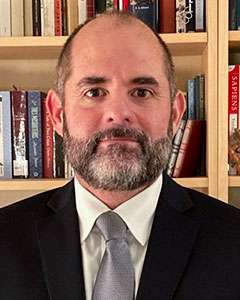
Carlos Jose Valderrama
Lawyer with over 20 years of experience in Ecclesiastical Law, Public International Law, and Peruvian Public and Private Law. He has been a member of IDEC since its foundation and has been studying the principles and norms of Ecclesiastical Law in Peru, the legal issues related to the right to religious freedom and conscience, and particularly the regulations governing the relationships between Churches and the State.
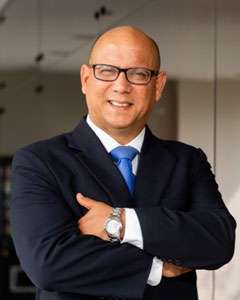
Luis Oré
Mediator, consensus building and stakeholder engagement practitioner, negotiation consultant, and conflict coach and trainer. Lawyer from the University of Lima. Master’s in communication from WKU (US) and Master in Conflict Management from the Institute for Conflict Management at Lipscomb University (US), trained in Negotiation Pedagogy from Harvard University, trained by Al Gore, former US VP in Climate Change and International Association for Public Participation (IAP2) Licensed Trainer. Former Deputy Secretary of Conflict Management with the Prime Minister Office of Peru during the transition and emergency government of Peru in 2021.
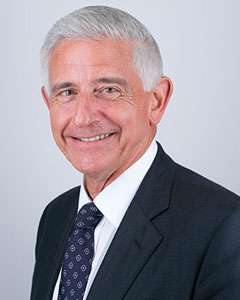
Wolf Von Kumberg
Is an internationally recognized independent arbitrator and mediator with 30 years of experience in solving complex disputes, focusing on engineering/infrastructure, energy, oil and gas (among others).

Marie Camille Pitton
Is a lawyer registered in France and New York, with over a decade of experience. She is currently the Secretary General of the CARO Arbitration and Mediation Center in the French West Indies, offering dispute resolution services to 33 states and territories in the Caribbean, supporting the sustainable development of the region.

Eve Tessera

Elise Groulx

Mark Appel

Paul Sills

Magrit Cordero
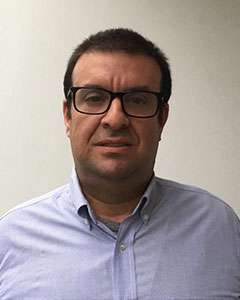
Fernando Rivera Pollarolo
University professor in the field of Human Talent Management. He holds a degree in Psychology from Universidad Ricardo Palma and a Master’s in Human Resources Management from the Escuela de Administración de Empresas (EAE) in Barcelona. He further complements his specialization with an International Diploma in Human Resources Management (Universidad de Les Heures – Barcelona and CENTRUM – Lima), the Executive Specialization Program in Human Resources from ESAN, and an international certification as a customer service trainer. At the professional level, he has held executive positions in Human Resources in organizations such as Banco Latino, Transligra, Hotel Los Delfines, Orbi Consultores, and Americatel. He also served as Human Resources Director at Boticas BTL and at Grupo GSS, a Spanish multinational company in the call center sector. He currently leads PEOPLE CONSULTING in Lima and Arequipa, serves as Country Manager of SCOTWORK — a British firm specialized in negotiation training — and is a senior lecturer at UPC in both undergraduate and graduate programs.

Yurica Ramos
Additionally, IDEC has formal partnerships with other organizations that specialize in dialogue and development programs.